


Cytotron for Stage 1 Breast Cancer
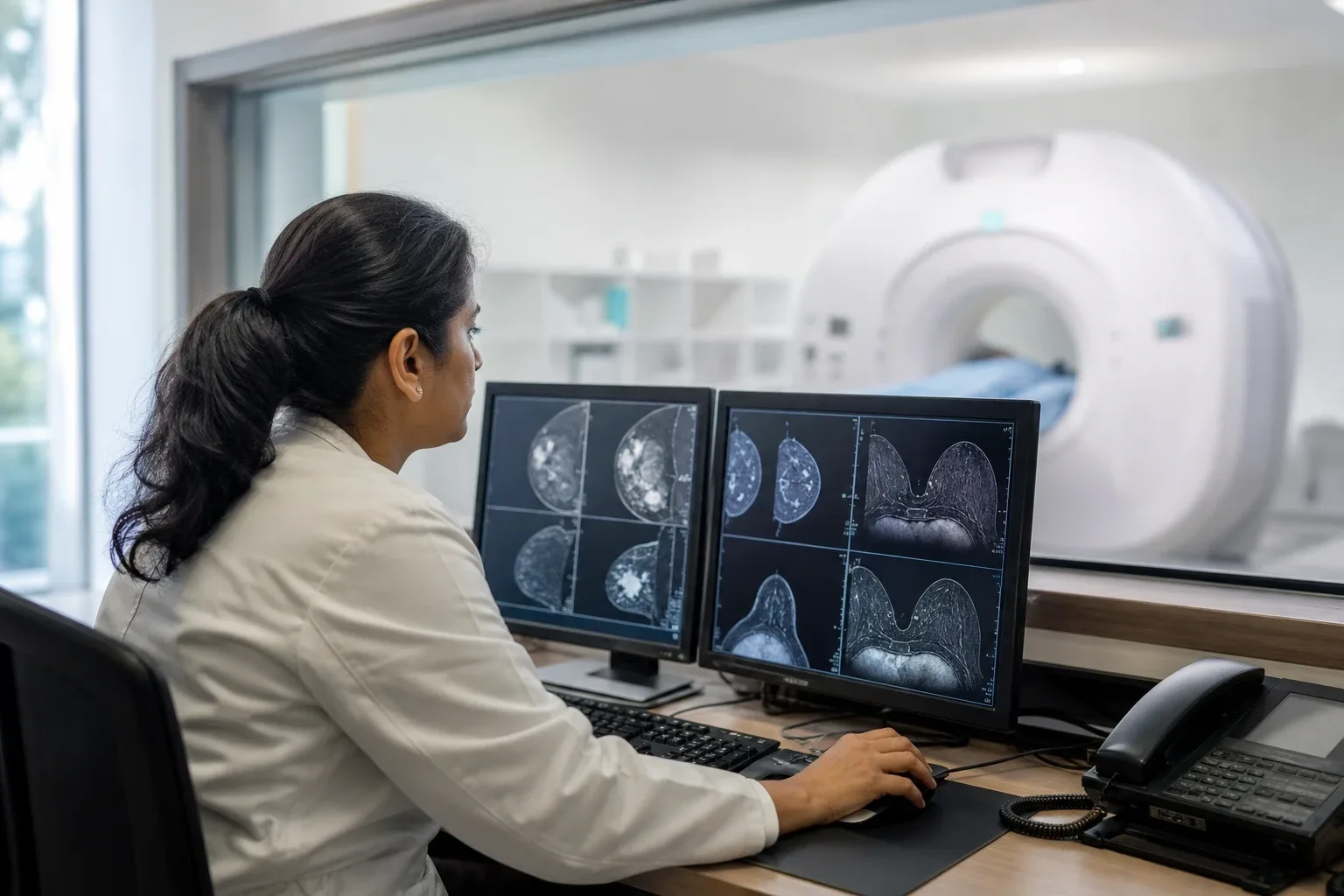
Cytotron has FDA Breakthrough Device Designation for breast tumors at any stage. Here is what the published evidence does - and does not yet - show about its use for Stage 1 breast cancer.
Table of Contents
Stage 1 breast cancer means the tumor is small. It is confined to the breast or has spread to only a few nearby lymph nodes. It has not reached distant organs such as the lungs, liver, or bones. For most people, standard treatment at this stage works well and uses proven methods. These include surgery, and depending on the tumor type, may also include radiation, hormone therapy, or targeted therapy.
Some patients want to try additional treatments alongside standard care. Cytotron is one such device. It is investigational, meaning it is still being studied and has not been fully approved for cancer treatment. This page explains what published sources and regulatory records currently show about Cytotron at Stage 1 breast cancer.
Who it may help
In October 2019, the U.S. Food and Drug Administration (FDA) granted Cytotron a Breakthrough Device Designation for solid tumors of the breast. This designation covers breast tumors at any stage, including Stage 1. It is an important step in developing clinical trials for this device. But it is important to understand what it means and what it does not mean.
The Breakthrough Device Designation is a development pathway. It lets the company and FDA work faster on clinical trials. The FDA grants this designation when a device may offer benefits over existing treatments and when faster development could help patients. But the designation itself does not confirm that those benefits exist. It is not an FDA approval of safety or effectiveness.
Cytotron has been used in compassionate-use settings. Compassionate use - sometimes called expanded access - allows patients to try a device outside of a formal clinical trial, usually when standard options don't work or are limited. Some programs have included patients with primary breast cancer with no spread to other organs. However, we found no published eligibility criteria specific to Stage 1 disease.
Right now, the device is available at a small number of specialist centers. Most are in India, where Cytotron holds local regulatory clearance. Access in other countries is very limited. Standard care for Stage 1 breast cancer is well tested and guided by published clinical guidelines. Any investigational approach should add to standard treatment, not replace it. Talk to your oncologist before making plans.
Who should not have it
We found no published list of reasons people shouldn't have Cytotron for breast cancer. A contraindication is a medical reason why a particular person should not receive a treatment.
Cytotron uses a pulsed magnetic field alongside radiofrequency energy. Because of this, people with certain implanted devices probably can't use it, like with other devices that use strong magnetic fields. These include people with:
- A pacemaker or implanted heart defibrillator
- A cochlear implant
- Any other active electronic implant inside the body
Magnetic fields can interfere with how these devices work and may pose a risk. This comes from how other magnetic devices work, such as MRI scanners. No published list confirms this for Cytotron.
Other things may affect whether you can use it, like prior surgeries, metal hardware in the body, or other health conditions. Before you make any plans, ask a physician at a center that offers Cytotron about all conditions that would exclude use. Do this before booking travel or making any other arrangements.
What the research shows
The published evidence on Cytotron for breast cancer is still new. We found no randomized controlled trials (RCTs) of Cytotron for Stage 1 breast cancer. An RCT is the strongest type of clinical study. Participants are assigned by chance to either a treatment group or a control group. This design lets researchers see the true effect of a treatment apart from other factors such as standard treatment given at the same time or the natural course of disease over time.
One observational study published in the Journal of Clinical and Experimental Oncology in 2021 included breast cancer patients among several tumor types treated with Cytotron. This was a compassionate-use study with no control group - no similar patients who didn't get Cytotron. The study was also not specific to Stage 1 disease. Without a control group, we can't tell if changes in patients were due to Cytotron, standard treatment, disease changes on their own, or some combination of these.
A 2009 health technology assessment by the International Network of Agencies for Health Technology Assessment (INAHTA) reviewed the evidence on Cytotron. The assessment found the evidence was not enough to say whether the device works or is safe. INAHTA is a network of government and public health agencies that independently evaluate medical technologies. These assessments help give health systems and patients a clear picture of how well a treatment has been tested.
The FDA Breakthrough Device Designation from 2019 means the FDA thinks faster trials might help patients. It doesn't mean Cytotron is proven safe or effective.
Some published research looks at radiofrequency electromagnetic fields and cancer cells. A study published in PubMed Central examines how radiofrequency electromagnetic fields at tumor-specific frequencies may target cancer cells. A further review in PMC discusses low-energy radiofrequency fields as a proposed approach to cancer, noting early clinical observations. A separate PubMed study found that low-intensity pulsed electromagnetic fields may reduce breast cancer cell viability in laboratory conditions. These studies are helpful background. But they don't study Cytotron specifically and don't prove it works in people with early-stage breast cancer.
In plain terms: there isn't enough proof yet about whether Cytotron helps patients with Stage 1 breast cancer. The research is in its early stages, which is why the device has a development designation instead of full approval.
What treatment involves
Cytotron is a large, whole-body machine. During a session, the patient lies inside the device. The machine sends rotating radiofrequency waves and a pulsed magnetic field around the body. The company calls this combination Rotational Field Quantum Nuclear Magnetic Resonance (RFQMR). The idea is that specific radiofrequency patterns might interact with cells and affect tumor biology. Researchers are still studying how it works.
Treatment sessions are outpatient - no overnight stays needed. Sessions happen daily. The company describes treatment continuing over several weeks. However, we found no published guidelines with exact session counts, lengths, or schedules for breast cancer. Before you commit, ask the center for a written description of your full treatment course.
Cytotron is not currently available in the United States. When this page was written, US clinical trials were still being developed under the FDA Breakthrough Device pathway. Right now you can mainly get it through specialist centers in India.
No formal study has looked at how Cytotron fits with standard Stage 1 treatment. Doctors have set clear standard care for this stage. The National Cancer Institute describes treatment for Stage 1 breast cancer as typically starting with surgery - often breast-conserving surgery with sentinel lymph node biopsy or mastectomy where needed. Many patients also receive radiation therapy. Depending on tumor biology, hormone therapy or targeted therapy may be recommended. The NCCN guidelines for invasive breast cancer outline these pathways in patient-friendly detail. Any experimental approach should add to, not replace or delay, these well-tested standard steps.
If you are thinking of traveling to India to access Cytotron, prepare carefully. Bring complete medical records: pathology reports, hormone receptor and HER2 test results, imaging studies, and a summary of your planned treatment from your home oncologist. Make sure both your home team and the treating center in India have the same information. The goal is making sure any experimental approach doesn't interfere with your recommended standard treatment schedule.
When to talk to your doctor
Talk to your oncologist before seeking Cytotron or any other investigational approach for Stage 1 breast cancer. Ask how it might interact with your planned surgery, radiation, or medical therapy. Ask if any clinical trials for Cytotron or similar devices are open now. If you are considering travel to India for care, make sure it doesn't delay recommended standard treatment at home.
This article is for general information only and is not medical advice. Do not stop, postpone or change prescribed cancer treatment based on it. Discuss any treatment decision with the qualified clinician responsible for your care.
Frequently Asked Questions
Is Cytotron FDA-approved for breast cancer?
No. Cytotron is not FDA-approved for breast cancer. The FDA granted it a Breakthrough Device Designation in October 2019 for solid tumors of the breast. This is a development pathway that helps the manufacturer carry out clinical trials faster. It is not an approval of safety or effectiveness. Cytotron remains an investigational device.
Should I use Cytotron instead of surgery or standard treatment for Stage 1 breast cancer?
No. Standard treatments for Stage 1 breast cancer - including surgery, radiation, and hormone or targeted therapy - are well-tested and guided by clinical guidelines. Cytotron is investigational and has not been shown in controlled trials to replace these approaches. Using an investigational device instead of standard care may put your health at risk. Any use of Cytotron should be discussed with your oncologist and planned to complement, not delay, standard treatment.
Is Cytotron available in the United States?
Not currently. Cytotron is mainly available through specialist centers in India, where it holds local regulatory clearance. As of the time this page was written, US clinical trials are still being developed under the FDA Breakthrough Device pathway. The device is not approved or commercially available in the US at this time.
How is Cytotron different from radiation therapy?
Radiation therapy for breast cancer uses high-energy X-rays or particles to target and damage cancer cells in a specific area. It is a well-established treatment with decades of clinical trial data. Cytotron uses rotating radiofrequency waves combined with a pulsed magnetic field across the whole body. The two technologies work very differently. Unlike radiation therapy, Cytotron has not been tested in large controlled trials for breast cancer, and its effectiveness has not been established. They are not interchangeable.
Ask Our Care Team
Have a question about what you have read, or about your own diagnosis? Send it here and a member of our team will contact you.

Have a Question About What You Have Read?
Medical Disclaimer
The content on this website is provided for general educational and informational purposes. It is not intended to diagnose, treat, cure, or prevent any disease and does not replace professional medical advice. Cancer-care decisions should be made in consultation with appropriately qualified healthcare professionals who understand the patient’s clinical circumstances.
Do not stop, delay, or change prescribed treatment based solely on information on this website. If you experience severe or rapidly worsening symptoms, seek urgent local medical care. AOHC’s contact channels are not an emergency service.